

Faculty of Economics and Business Administration Department of Economics Economics
Economic Data Science Course
Data-driven
Developing decision-making talent
Course Features
-
-
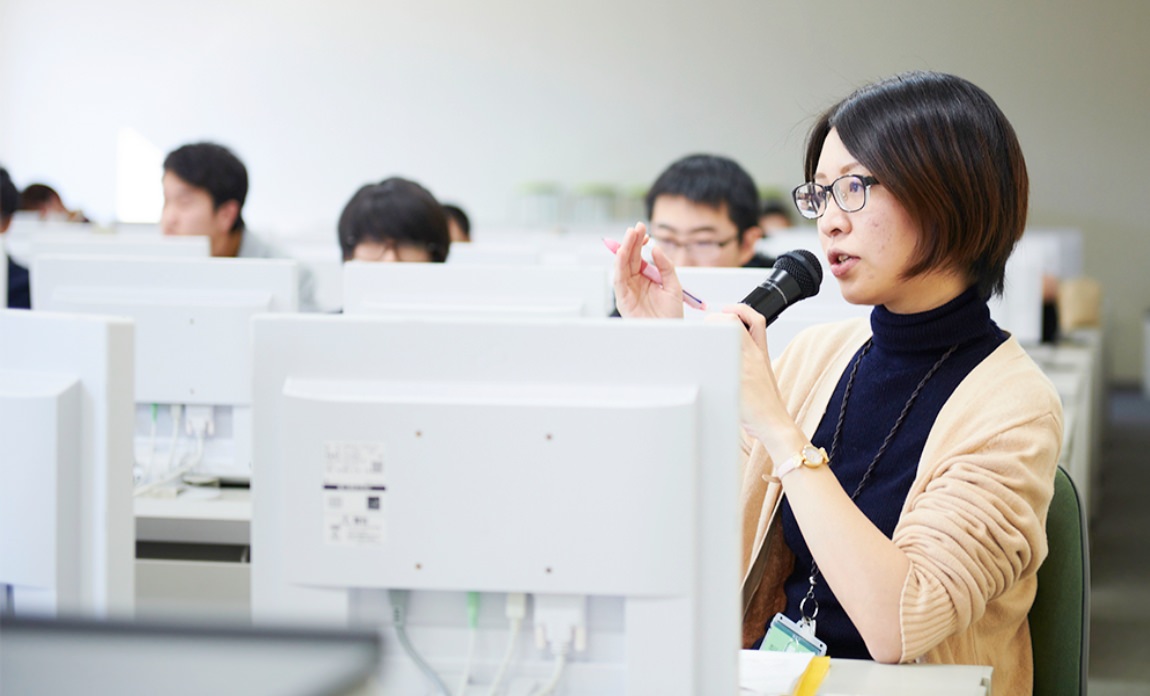
Our aim is to use data to solve all kinds of social issues, including economic, regional, and financial issues. Students will learn statistics, econometrics, and programming, and acquire the ability to analyze and evaluate data. We will cultivate talent who can make appropriate decisions and formulate policies based on evidence.
Three points
- Acquire the ability to objectively analyze and evaluate data
- Learn data science from basics to applications
- Understanding the warm hearts and thoughts of the people behind the data
Flow of the four years
-
1st year (common to all courses)
Discovering various social issues through economics
In the first year, students learn the basics of economics while acquiring logical thinking skills and analytical skills based on statistics. Students will logically consider the causes and solutions of all social and economic problems of the past, present, and future from an economics perspective.
Reference LessonsIntroductory Economics, Basic Seminar, Basic Statistics
-
Second Year
Everyone learns programming knowledge and creativity from scratch
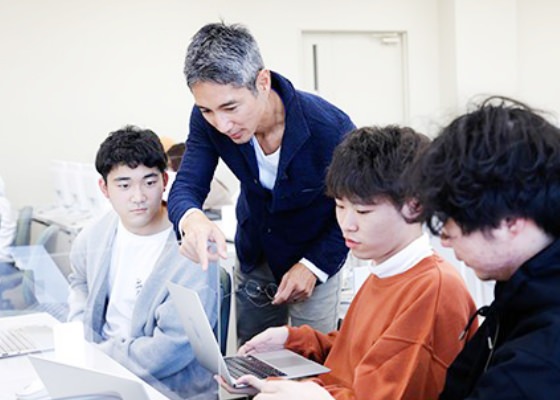
This program is aimed at students who have no prior experience with programming, and will teach programming from the very basics (including installation and preparation). Through group work, students will think together about the "ways of thinking" needed when programming and the "ideas" needed for application. The goal is for students to be able to build simple programs on their own over the course of a year.
Reference LessonsBasic Specialized Seminar A/B, Introductory Econometrics A/B, Database, Fundamentals of Data Science
-
Third Year
Applying data analysis to verify and dig deeper into social issues
The aim is to use the data utilization and analytical methods learned in the first and second years to empirically examine complex social issues. Students will dig deep into realistic social problems they have set themselves and proactively learn more specialized fields. The goal is also to acquire applied models and analytical methods to deal with complex problems that they have not been able to address before.
Reference LessonsSeminar I/II, Econometrics A/B, EBPM Case Studies and Practice, Economic Data Analysis A/B
-
Fourth Year
Deepen your research in your field of expertise and aim to become a person who can use data to play an active role in society.
In order to be able to use data effectively to solve social problems, students will deepen their studies in their specialized fields and conduct graduation research. This is a period of practical preparation for becoming a member of society who can play an active role in a variety of situations, including not only continuing to learn how to read and use data and analytical methods, but also when it is better and not to use data.
Reference LessonsSeminar III/IV, Econometrics A/B, EBPM Case Studies and Practice, Economic Data Analysis A/B
Class Introduction
-
Basic Specialized Seminar A/B
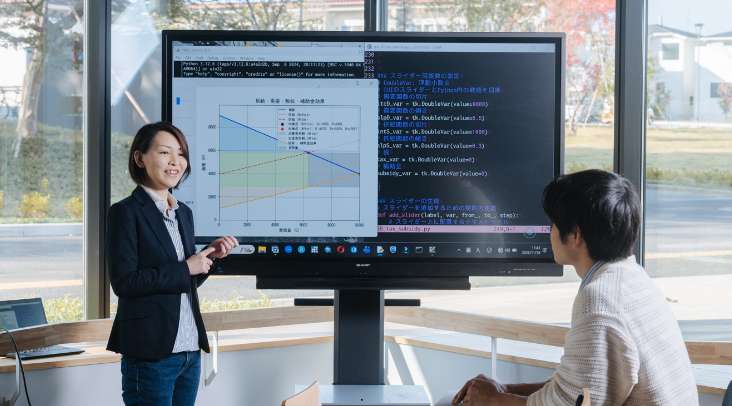
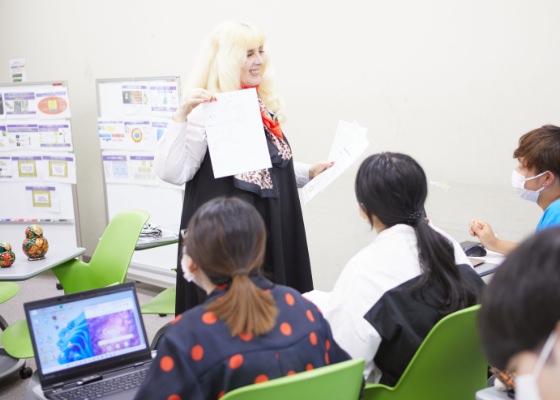
Person in charge: Associate Professor Maria Ikegawa
Students will learn algorithms (procedures for thinking about things) through group work and idea presentations and sharing, and will acquire the fundamentals of programming and coding. Furthermore, they will apply the knowledge they have learned to create their own programs. They will also work on developing visualization applications using hypothetical economic data, thereby developing practical skills.
-
Econometrics A/B

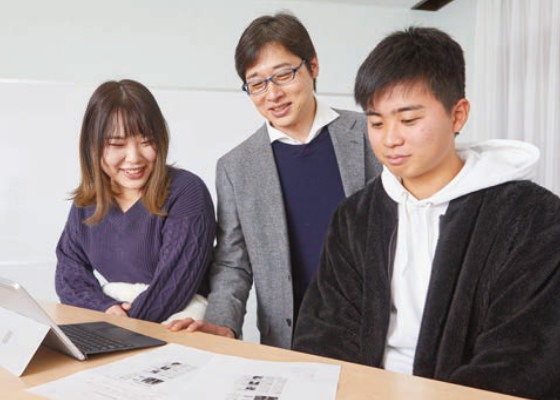
Person in charge: Associate Professor Maria Ikegawa
Students will deepen their understanding of social, regional, and global issues by conducting their own analyses using actual numerical data. By analyzing and evaluating objective data, students aim to discover new issues, evaluate policies, and propose solutions to the various problems facing society as a whole.
-
EBPM Case Studies and Practices

This is an omnibus-style class, with some external Senior Lecturer invited. Students will learn how objective numerical data is used in actual policymaking processes. After studying case studies, students will seek out and propose effective ways to utilize existing data.
Qualifications that can be acquired
TOEIC®/IT Passport/Fundamental Information Technology Engineer Examination/Python3 Engineer Certification Basic Examination/CG-ARTS Association Web Designer Certification Basic Expert/CG-ARTS Association Multimedia Certification Basic Expert/MOS (Microsoft Office Specialist)/Nissho Bookkeeping Certification Level 3/Statistical Certification Level 3 and Level 2/Financial Planning Skills Certification Level 3 and Level 2/Economics Certification Examination (ERE Micro and Macro)
Target career path
Civil servants (prefectures and municipalities), manufacturers, trading companies, finance, IT, logistics, construction and real estate, travel and tourism, local cooperatives, regional coordinators, international civil servants, global companies, etc.