

Faculty of Economics and Business Administration Department of Economics Economics
Tourism and Regional Revitalization Course
The challenges facing local communities and the tourism industry
Work to solve the problem
Course Features
-

-
We will consider solutions from an economic perspective to the issues surrounding the role of local communities and regional tourism in a declining population, super-aging society, and global society. As the resident population will inevitably decline in the future, tourism, which is at the forefront of inflow of population, has become an important theme for regional revitalization. There is a wealth of active learning in collaboration with tourism companies such as hotels and government agencies (city hall, etc.), and students will actually go to the site to understand social needs and regional issues and derive solutions.
Three points
- Understanding "tourism" and "regional revitalization" from an economic perspective
- Learn data science and develop evidence-based analytical and problem-solving skills
- Plenty of practical learning opportunities
Flow of the four years
-
1st year (common to all courses)
Discovering various social issues through economics
In the first year, students learn the basics of economics while acquiring logical thinking skills and analytical skills based on statistics. Students will logically consider the causes and solutions of all social and economic problems of the past, present, and future from an economics perspective.
Reference LessonsIntroductory Economics, Basic Seminar, Basic Statistics
-
Second Year
Planning measures to revitalize the local area through fieldwork
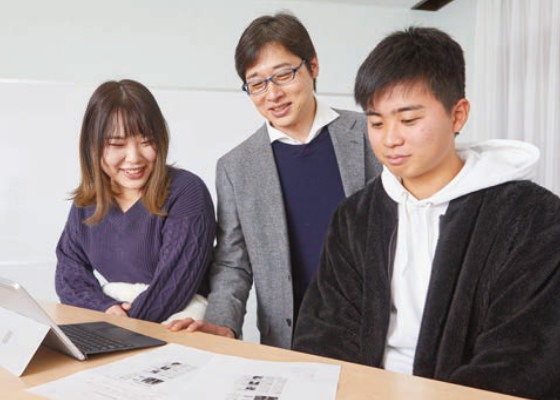
Through fieldwork, we will work with industry, government, and academia to consider measures that will lead to an increase in the influx of people. We will actively communicate with government and companies to have our ideas evaluated and clarify the issues that need to be addressed in order to put them into practice.
Reference LessonsBasic Specialized Seminar A/B, Tourism and Hospitality Theory
-
Third Year
Learn about the link between tourism and regional revitalization through examples of regional revitalization
Students will compare the past and present of regional revitalization in their own countries, analyze the current situation, and explore the potential for growth in the tourism industry in regional revitalization. With the goal of discovering and creating tourism resources in each region, students will learn about the relationship between tourism and regional revitalization from an economic perspective, while referring to successful examples.
Reference LessonsSeminar I, Tourism Economics, Regional Economics, Special Topics in Tourism Business A/B, Community Design Theory, Community Design Seminar, Public Policy, Public Policy Seminar
-
Fourth Year
Aiming to contribute to regional revitalization through practical learning
Students will conduct fieldwork to create tourism resources and contribute to regional revitalization. This is a practical initiative involving collaboration between industry, government, and academia. As this initiative generates income and expenditures, students will discuss with their partners what measures to take in the event of a deficit and consider the impact their efforts have had on regional revitalization. Through these practical learning experiences, students will view the tourism industry from an economic perspective and conduct analysis using objective data.
Reference LessonsTourism Economics, Regional Economics, Advanced Topics in Tourism Business A/B, Community Design Theory, Community Design Workshop, Public Policy Studies, Public Policy Workshop
Class Introduction
-
Basic Specialized Exercises
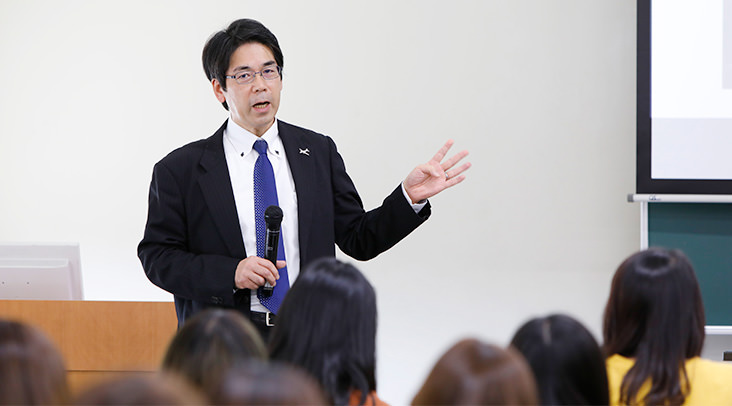
Person in charge: Professor Kazuhiko Yamakawa / Assistant Professor Jungan Ouyang
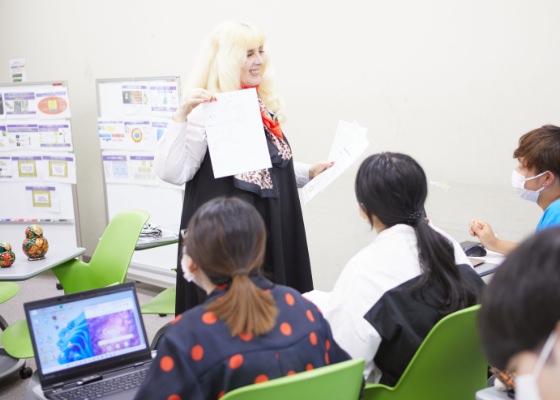
This is a class where students use their minds and bodies to solve real social issues. They learn about the connections between tourism resources and local resources and the local economy and management, and consider how to revitalize the region. They also understand the ideas and mechanisms for promoting Japanese subculture overseas, and plan and propose projects for partner companies.
-
Tourism Economics
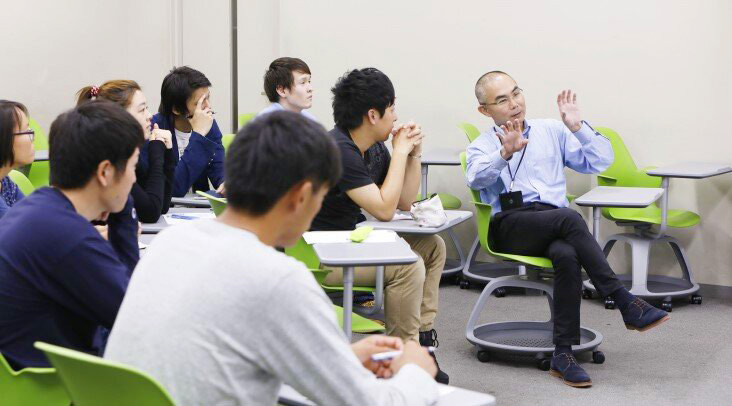
Person in charge: Professor Yoshiki Kago
Tourism is a prime example of "experience consumption," where people enjoy experiences, and is an industry with great potential for growth in revitalizing local communities struggling with an aging society. In this class, students will use data to analyze the economic impact of tourism and understand how the tourism industry relates to the overall economy, regional revitalization, and other industries. Students will also learn about the diverse forms of tourism today, such as ecotourism and inbound tourism.
-
Tourism Business Special Lecture A/B

Instructors: Professor Yoshiki Kago / Senior Lecturer Fumitoshi Onoma / Senior Lecturer Tatsuro Tonoki / Senior Lecturer Naoyuki Hirano / Senior Lecturer Shigeru Kosugi
Three things are needed to revitalize a region: young people, outsiders, and fools. Of these, the most important are the fools who come up with interesting ideas. This intensive course will be taught by Part-time Lecturer with unique ideas. The ideas gained from these Senior Lecturer will inspire you and lead to useful learning.
Student Interview
Why did you choose this course?
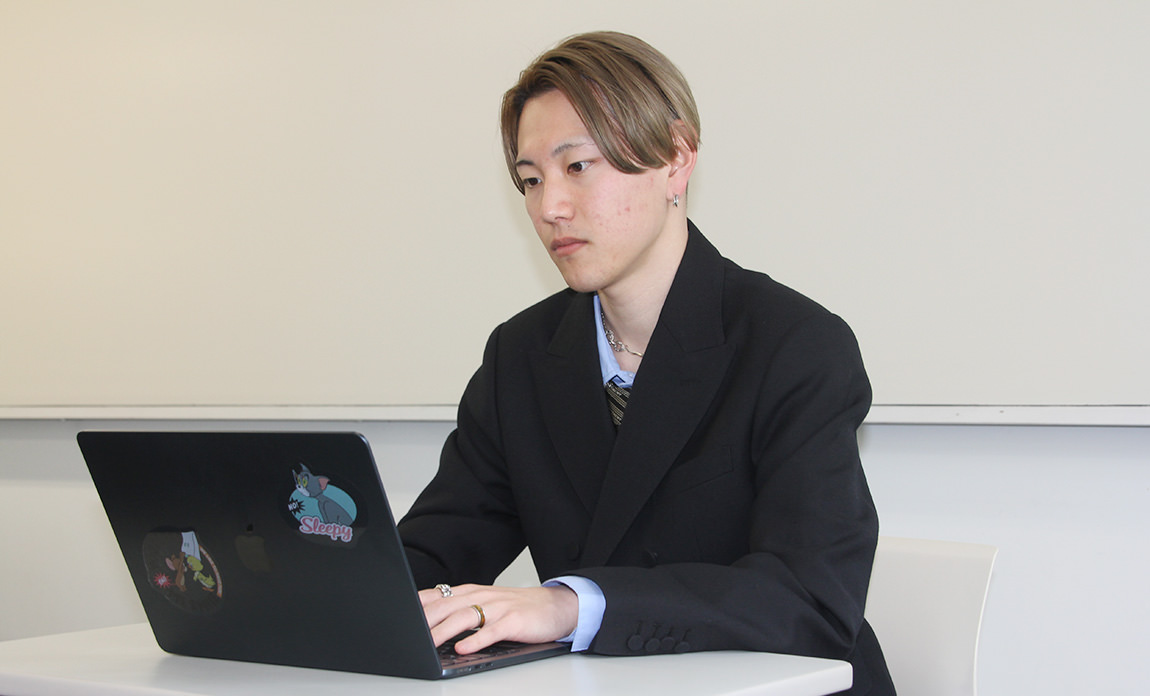
My reason for choosing this course is that I wanted to contribute to the revitalization of my hometown, Misato City. The area around Shin-Misato Station is very lively with large commercial facilities, but the area where I live is a quiet commuter town, and I have felt that there is a disparity in vibrancy even within the same city. I chose this course because I wanted to learn how to solve this problem. In the future, I would like to work in a financial institution and support the community from a financial perspective, so I want to cultivate a perspective that accurately grasps the needs on the ground.
What are you particularly focusing on learning?
I am focusing on empirical analysis of "how to revitalize a town." Specifically, in order to promote "mirin," a specialty product of Nagareyama City, I actually visited the local Mirin Museum and conducted research on the actual state of tourism promotion utilizing traditional industries. Rather than just sightseeing, I realized the fascinating aspect of analyzing how to connect historical resources to attracting visitors in the modern era, and how to transform the feelings of local people into economic value. While valuing the "real voices" I gained on-site, I am striving to hone my regional analysis skills, which will also be useful in my future financial practice.
Qualifications that can be acquired
TOEIC®/IT Passport/Fundamental Information Technology Engineer Examination/Python3 Engineer Certification Basic Examination/CG-ARTS Association Web Designer Certification Basic Expert/CG-ARTS Association Multimedia Certification Basic Expert/MOS (Microsoft Office Specialist)/Nissho Bookkeeping Certification Level 3/Statistical Certification Level 3 and Level 2/Financial Planning Skills Certification Level 3 and Level 2/Economics Certification Examination (ERE Micro and Macro)
Target career path
Civil servants (prefectures and municipalities), manufacturers, trading companies, finance, IT, logistics, construction and real estate, travel and tourism, local cooperatives, regional coordinators, international civil servants, global companies, etc.