

Faculty of Global Studies Department of Global Communication
Japan Studies and International Communication (JIC) Major
Improve your Japanese and English skills,
Cultivating talent who can promote "Japan"
Special Features of the Department
-
-
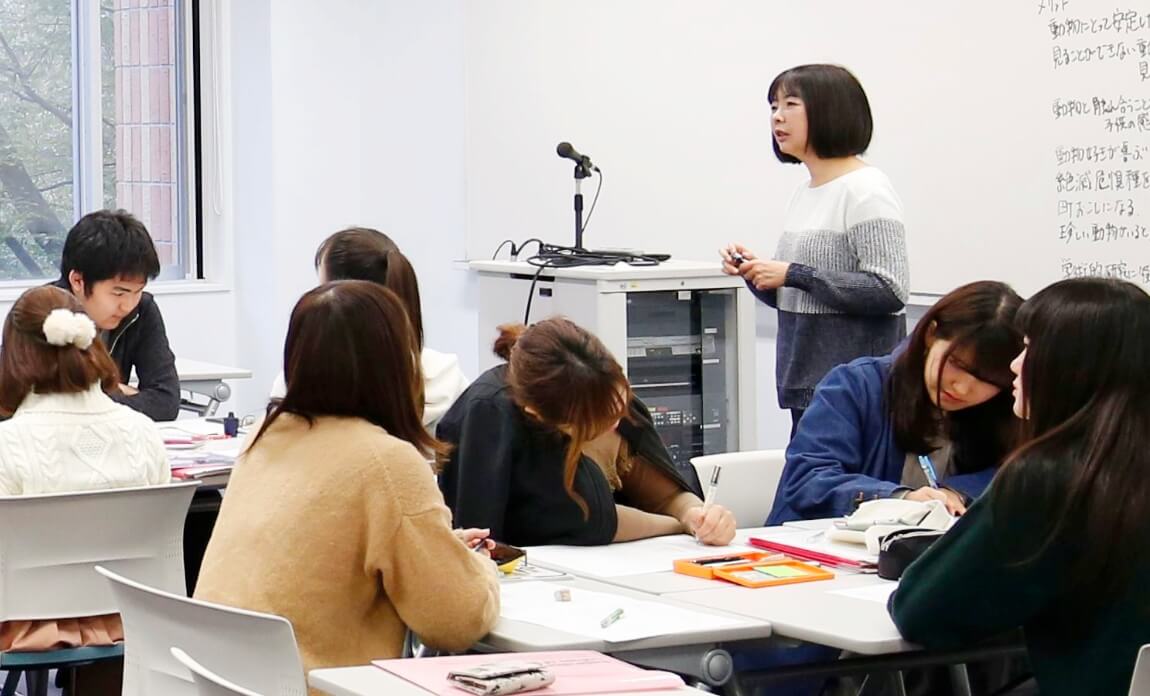
クラスの約4人に一人が留学生という多文化共生空間で、英語・日本語の運用技術と「日本(自分たち)」を発信する力を磨きます。日本語教育養成・実践研修課程も設置。日本語教育専門の教員からしっかり学べます。
Three points
- Acquire communication skills in both Japanese and English
- Learn about Japan and understand different cultures
- Learning alongside international students and experiencing multicultural coexistence
Flow of the four years
-
First year
Developing communication skills in Japanese and English in a multicultural environment
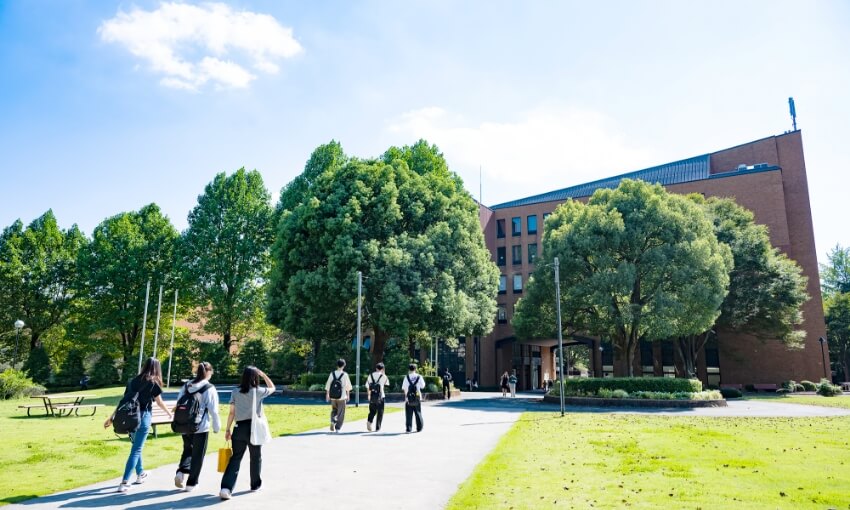
Students will hone their language skills in both Japanese and English and acquire the ability to express themselves. In an environment where approximately one in four students is an international student, students will experience multicultural coexistence on a daily basis. Students will learn basic knowledge and attitudes regarding intercultural understanding.
e.g.基礎ゼミナール、日本語教育入門、日本語教育基礎 A(日本語と世界)、記号と文化
-
Second Year
Understanding different cultures objectively by knowing Japan objectively
In order to understand a different culture, it is essential to go through the process of getting to know "ourselves = Japan" deeply. While learning a wide range of basic content such as Japanese culture and international relations, students will continue to train in Japanese and English language usage.
e.g.Academic Skills, Multicultural Coexistence, Japan Studies, Introduction to International Japanese Studies
-
3rd and 4th year
Choose a specialty from a wide range of topics and compile it into your graduation research
Based on what you learned in your first and second years, you can choose a field that interests you and deepen your expertise. There are a wide variety of fields to study, including multicultural coexistence, Japanese cultural studies, Japanese society studies, and Japanese language education.
By joining seminars and deepening your expertise, you will compile the topic you want to pursue into a "graduation research" that will be the culmination of your four years of learning. You can also take graduate school classes.e.g.メディア社会研究 B(ジャーナリズム研究)、日本語教育学 D(ことばの学習と習得)、メディア文化研究 B(記号文化研究)、メディア社会研究 C(現代社会とメディア)、日本語教育学 H(ビジネスコミュニケーション研究)、日本語教育学 E(共生のための日本語論)、自主企画ゼミナール
Class Introduction
-
Introduction to International Japanese Studies

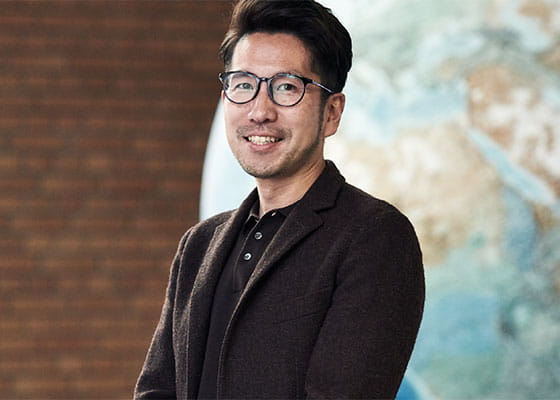
Instructor: Associate Professor Morgan, Jason M.
Intercultural understanding begins with questioning and questioning our own common sense. Through discussions on a variety of topics, students will come into contact with "Japan as seen from the outside," and think about "Japan" together with Japanese people.
-
日本語教育学 E(共生のための日本語論)
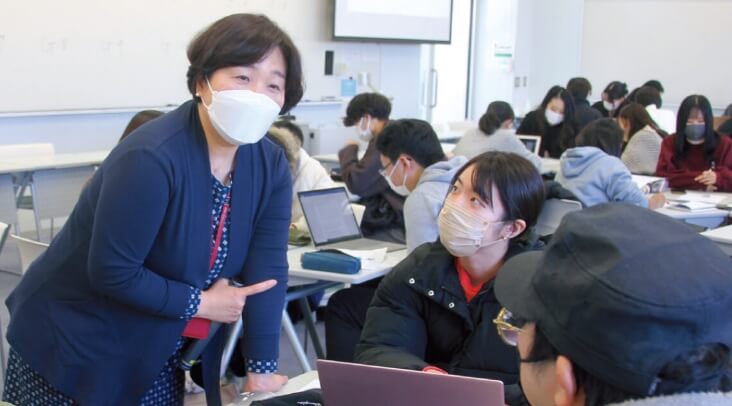
Person in charge: Professor Kim Hyogyung
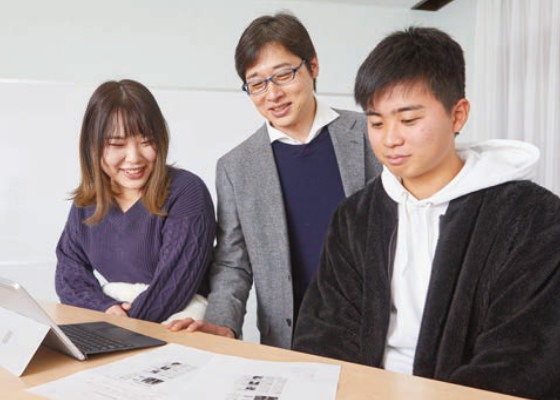
This class considers Japanese language education and Japanese language learning support in a multicultural society. Through fieldwork, students learn about the types of Japanese language learning support being provided by Japanese language schools, local governments, elementary schools to universities, companies, volunteer classes, etc. Based on this class, students independently carry out volunteer activities in collaboration with off-campus Japanese language learning support groups.
-
Academic Skills A/B/C
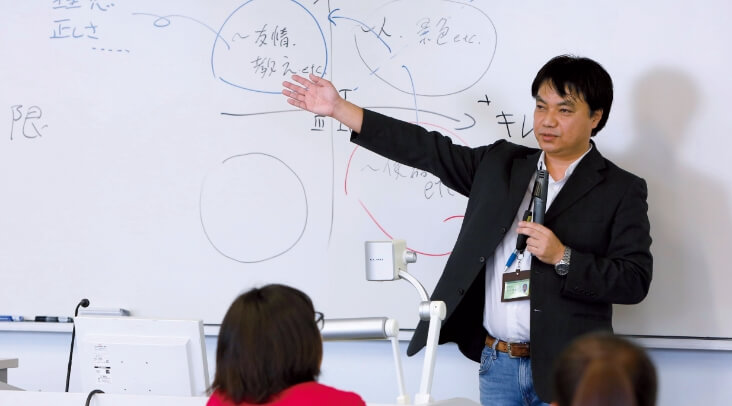
In charge: Professor Yasuhiko Nobayashi / Associate Professor Choshin Nakazono / Senior Lecturer Sakura Sasaki
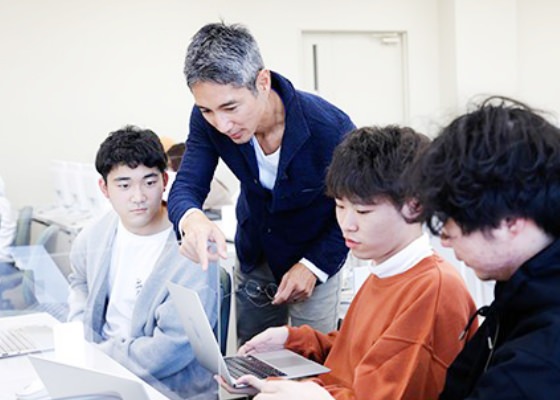
In today's increasingly complex society, it is of utmost importance to be knowledgeable about how to handle information. This class will focus on three areas of training (logic, reading comprehension, and essay writing) to help students acquire advanced and specialized language information operation skills.
Student Interview
Why did you choose this major?
高校2年生のとき、日本語教育に興味を持ったことが大きなきっかけです。日本語支援を必要としている子どもが多くいる一方で、支援する人材が不足している現状を知り、「私も将来、外国につながりを持つ子どもたちに支援を届けられる人になりたい」と考えるようになりました。
志望大学を検討する中で、本学には国際性の高い環境が整っていることを知り、さまざまな文化や価値観に触れながら、日本語教育について学ぶことができると感じ、志望しました。
What are you particularly focusing on learning?
日本語教育を中心に、基礎的な知識の習得に力を入れて学んでいます。日本語教育の授業では、日本語学習者の立場に立つことを意識し、日本語を外国語として捉える難しさを感じながらも、新たな発見を楽しみつつ学んでいます。
また、学生主体で活動する団体「こども日本語支援 すまいる」に所属し、外国につながりを持つ子どもたちとの交流にも積極的に取り組んでいます。この活動は、子どもたちに支援を届けるための第一歩になっていると感じています。

Qualifications that can be acquired
TOEIC® / TOEFL® / EIKEN / Test of Practical English Proficiency (TOPIK) / Hangul Proficiency Test / Japanese Language Teaching Proficiency Test / Exemption from Basic Exam for Registered Japanese Language Teachers / Japanese Language Proficiency Test (JLPT) N1 / BJT Business Japanese Proficiency Test / IT Passport / Information Technology Engineer Examination / CG-ARTS Association Web Designer Certification Basic Expert / CG-ARTS Association Multimedia Certification Basic Expert / MOS (Microsoft Office Specialist) / Japan Chamber of Commerce and Industry Bookkeeping Certification Level 3
Target career path
Japanese language education personnel, regional coordinators, travel and tourism, hotels, media, etc.
Japanese Studies and International Communication (JIC) MajorInterview
Reitaku Journal, an online content that allows you to learn more about Reitaku University, introduces current students and active alumni studying in each department.