

お知らせ
【実施報告】チェコ共和国のマサリク大学およびパラツキー大学で自主企画ゼミ制作のドキュメンタリー映画を上映
2026年3月17日・18日の2日間にわたり、チェコ共和国のマサリク大学(ブルノ)およびパラツキー大学(オロモウツ)において、本学工学部 河野洋教授の自主企画ゼミで制作されたドキュメンタリー映画「Airi」の上映を実施しました。
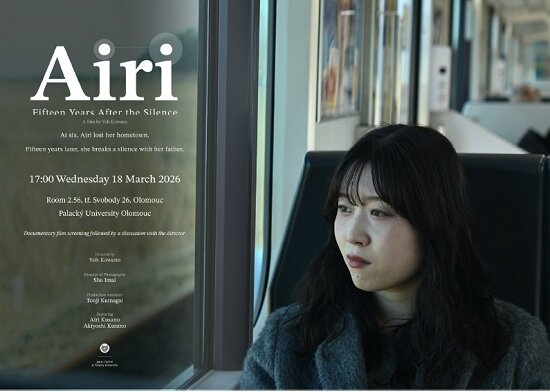
上映は計3回実施され、マサリク大学では日本研究学科の学生約15名を対象とした上映と、22名が参加した一般公開上映の2回を開催。パラツキー大学での上映には約30名が参加しました。いずれも日本研究関連部局の主催のもと、学生を中心に教員や一般参加者も来場しました。
本作「Airi」は、福島県出身の愛梨さんが、東日本大震災により故郷を離れ、避難生活を経験した実体験をもとにしたドキュメンタリーです。震災当時、父親は地元に残り、愛梨さんは母親とともに別の土地で生活することとなり、家族は離れて暮らすことを余儀なくされました。震災から15年を経て、本作では、これまで語られることのなかった思いや沈黙を越え、父と娘が対話を試みる過程が描かれています。
本作は今回が初の一般公開であり、さらに海外での上映ということもあり、どのような反応が得られるか未知数でした。しかし実際には、観客は作品に深く引き込まれ、上映後の会場は強い感情に包まれました。言葉を失うほど圧倒される様子や、涙を流す参加者の姿も見られ、特に若い世代の観客からは、愛梨さんの語りが自身の内面に強く響いたという声が多く寄せられました。
上映後のディスカッションでは、観客が本作のテーマを深く理解している様子が印象的でした。トラウマとともに生きること、移動の連続や家族の分断、沈黙、そして再び対話へと向かう過程など、多層的なテーマが丁寧に読み取られていました。
なかでも、愛梨さんと父親との対話の場面は、多くの観客に強い印象を残しました。極めて私的なやり取りでありながら、その対話が共有されたことへの感謝の声が多く寄せられました。また、上映時間が約22分と比較的短いこともあり、「もっと見ていたい」「対話の続きを見たい」といった声も複数聞かれました。
今回の上映を通じて、映像という表現手法が、学術的なテーマを扱いながらも人々の心に直接届く力を持つことが改めて示されました。本作では、従来のインタビュー形式ではなく、現場への継続的な関わりや関係性の構築を重視し、対話の瞬間に制作者自身が「見えない存在」となることを目指した民族誌的アプローチが採用されています。こうした手法によって引き出された生の感情や対話は、文章や記録だけでは捉えきれない価値を持つものであり、観客からも高い評価を得ました。
今回の取り組みは、本学における教育・研究の成果を国際的な場で発信する機会となるとともに、異なる文化的背景を持つ人々の間で対話を生み出す貴重な機会となりました。
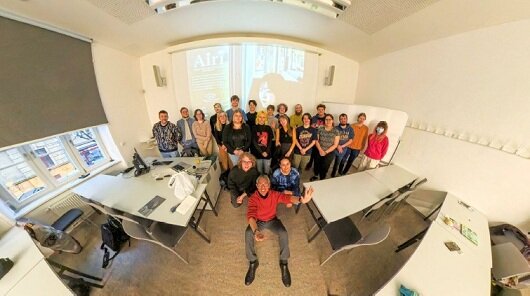 マサリク大学
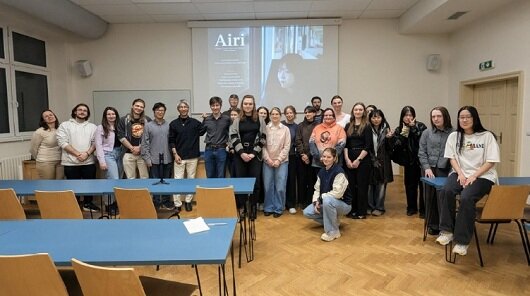 パラツキー大学
On March 17 and 18, 2026, screenings of the documentary film "Airi," produced as part of a seminar led by Professor Yoh Kawano of the Faculty of Engineering at our university, were held at Masaryk University (Brno) and Palacký University (Olomouc) in the Czech Republic.
A total of three screenings were conducted. At Masaryk University, two screenings were held: one for approximately 15 students from the Department of Japanese Studies and a public screening attended by 22 participants. At Palacký University, approximately 30 people attended the screening. All screenings were organized by departments related to Japanese studies, with audiences consisting primarily of students, along with faculty members and members of the general public.
The documentary "Airi" is based on the real experiences of Airi, who is from Fukushima Prefecture and was forced to evacuate following the Great East Japan Earthquake. At the time of the disaster, her father remained in their hometown, while Airi and her mother relocated and lived separately, resulting in a prolonged period of family separation. Fifteen years after the disaster, the film depicts the process through which Airi and her father attempt to overcome years of silence and engage in dialogue.
As this was the film's first public screening and its first presentation overseas, there was uncertainty about how it would be received. However, the audience was deeply engaged, and the venue was filled with strong emotion after the screenings. Some attendees were so overwhelmed that they were unable to speak, while others were moved to tears. Many viewers, particularly younger audience members, commented that Airi's narrative resonated deeply with their own inner experiences.
During the post-screening discussions, it became clear that the audience had developed a deep understanding of the film's themes. Complex issues such as living with trauma, repeated displacement, family separation, silence, and the process of returning to dialogue were thoughtfully interpreted.
In particular, the dialogue between Airi and her father left a strong impression on many viewers. Although it was an extremely personal exchange, many expressed their appreciation that such a conversation had been shared. Furthermore, despite the relatively short runtime of approximately 22 minutes, several audience members expressed a desire to see more, particularly hoping to experience a deeper continuation of the dialogue.
These screenings demonstrated that film, as a medium, has the power to convey academic themes while reaching audiences on a deeply personal level. Rather than relying on a conventional interview format, the film adopts an ethnographic approach that emphasizes ongoing engagement with the field and the building of relationships, aiming for the filmmaker to become an "invisible presence" during moments of dialogue. The raw emotions and conversations brought forth through this approach hold a value that cannot be fully captured through written records alone, and this aspect was highly appreciated by the audience.
This initiative not only provided an opportunity to share the outcomes of our university's education and research on an international stage, but also served as a valuable occasion to foster dialogue among people from diverse cultural backgrounds.

麗澤大学がもっとよく分かるオンラインコンテンツ