

Faculty of Economics and Business Administration Department of Economics Economics
Economics Course
By studying economic theory
Understanding the nature of the problem
Course Features
-
-
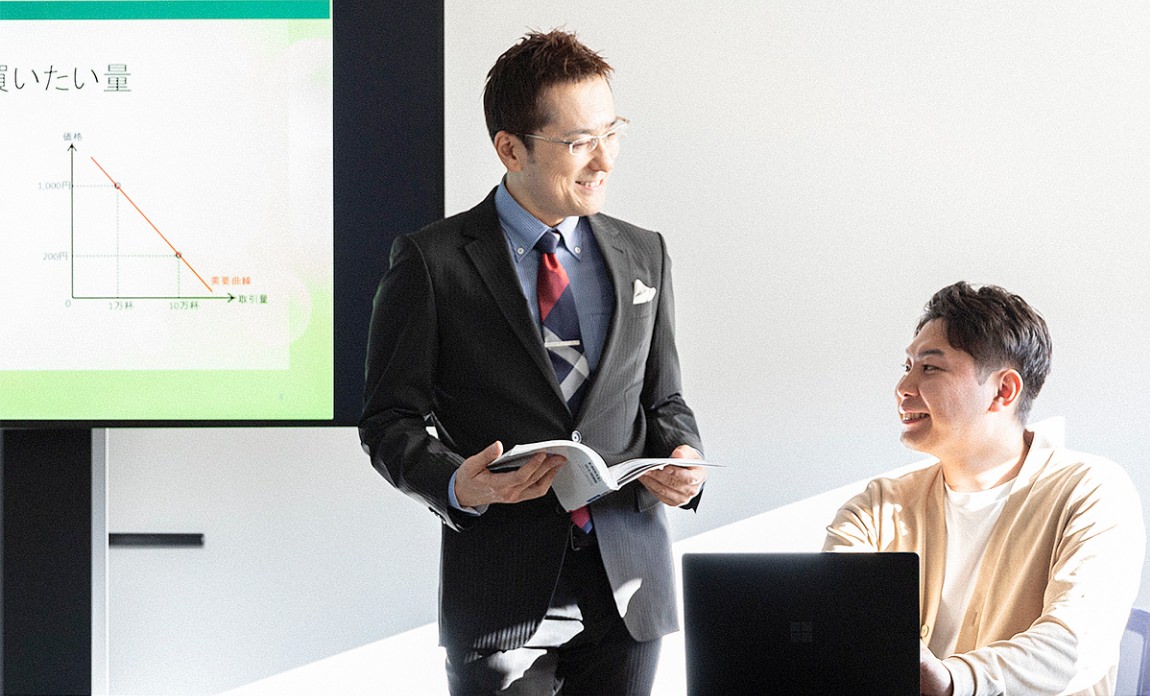
Students will study a wide range of specialized fields in economics and develop the ability to logically and empirically analyze the causes and solutions to economic phenomena. They will use economic knowledge to consider solutions to a variety of economic and familiar social issues, such as traffic congestion, human misconduct, environmental problems, and declining birthrates.
Three points
- Learn about economic mechanisms and analyze various social issues
- Cultivate logical thinking and objective analytical skills
- A wide range of options are available for future careers, including civil service and finance.
Flow of the four years
-
1st year (common to all courses)
Discovering various social issues through economics
In the first year, students learn the basics of economics while acquiring logical thinking skills and analytical skills based on statistics. Students will logically consider the causes and solutions of all social and economic problems of the past, present, and future from an economics perspective.
Reference LessonsIntroductory Economics A/B, Basic Seminar A/B, Fundamentals of Statistics
-
Second Year
Following the traditional path of Faculty of Economics and Business Administration and expanding your future options
In the Economics course, students will study a wide range of economic fields, learning all areas in a balanced way, from theoretical analysis and data analysis to fieldwork. Specifically, students will study business cycles, personal consumption, and financial theory through classes, and work on assignments in groups. This will enable them to acquire a solid foundation of economics that will enable them to play an active role in various aspects of society, and they will deepen their learning in line with their career path and interests in preparation for next year's seminars.
Reference LessonsBasic Specialized Seminar A/B, Morality and Economics, Game Theory (Applied Economics A)
-
Third Year
A stage that emphasizes output and tests your skills in a practical setting
Students will develop the ability to apply the economics knowledge and analytical skills they have acquired to date in ways that are closer to the real world. There are plenty of opportunities for output, such as presentation contests both on and off campus, and collaborative projects with local communities and companies. Through the process of thinking independently about questions that have no correct answer and deriving answers through discussion with peers, students will naturally acquire practical skills and expressive abilities. From "knowing" to "being able to communicate" and "being able to take action." This will be a dynamic year in which learning will quickly connect with society.
Reference LessonsSeminar I, EBPM Case Studies and Practice, Public Economics, Family Economics (Applied Economics C)
-
Fourth Year
The culmination of expertise and the finishing touch to develop skills that can be utilized in society
This is a year in which you will thoroughly work on your graduation research based on your own interests and themes, deepening your expertise in economics. At the same time, with your start as a working adult looming, you will further hone your practical business skills, problem-solving abilities, presentation skills, and other skills that will be useful in the workplace. By spending your final year in this way, you will be able to put your university studies into shape and step out into society with confidence, and you will be able to truly feel that the four years you spent in the economics course have solidified your abilities.
Reference LessonsEBPM Case Studies and Practices, Public Economics, Family Economics (Applied Economics C)
Class Introduction
-
Introductory Economics A/B
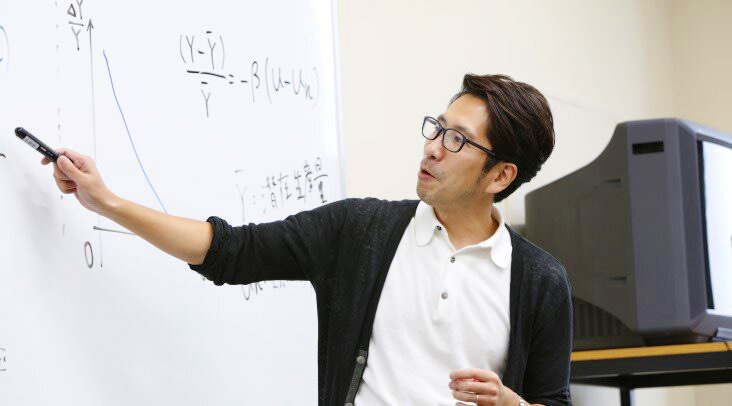
Person in charge: Professor Toshiyuki Okoshi
This is the most important subject for first-year students, focusing on understanding actual economic phenomena and developing an interest in social issues. Students learn about the drama that unfolds on the stage of the market, involving households, companies, and governments. In conjunction with the Basic Seminar, a small-group class, we aim to be "the most understandable economics class in the world."
-
Financial Theory
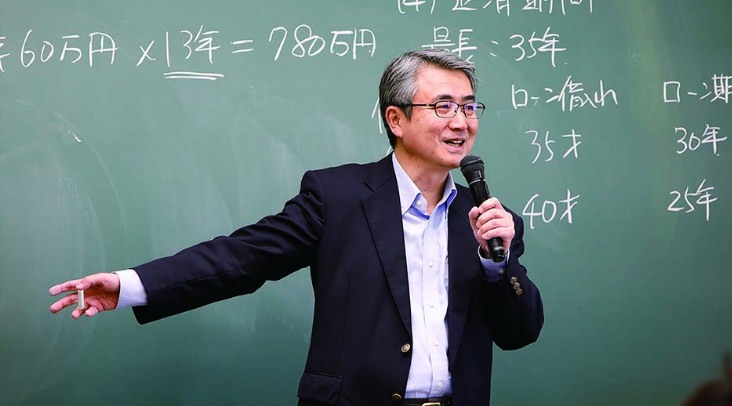
Instructor: Professor Kenichi Hirayama
Finance refers to the "flow of money." In this class, we learn about financial players (who), financial markets (where), and financial transaction methods (how). Mortgages and cashless payment methods are popular topics that are familiar to students. Many students are also interested in asset management in the era of 100-year lifespans.
-
Morality and Economics
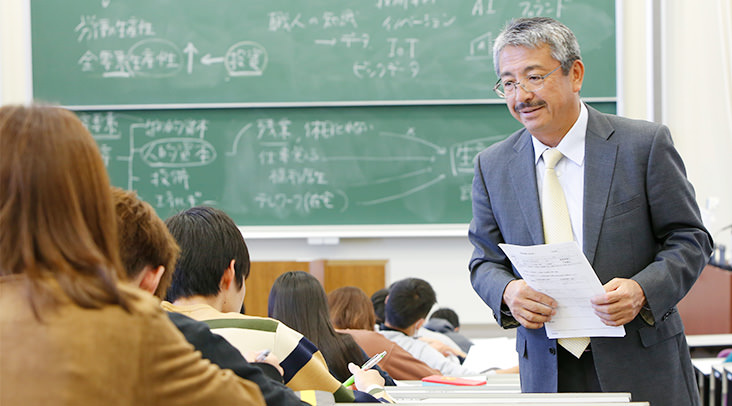
Person in charge: Professor Toshiyuki Okoshi
Based on Reitaku University 's philosophy of "unity of knowledge and virtue," this class simultaneously teaches economic knowledge and how to be a person. In addition to the basics of economics, students will explore from multiple angles the meaning of economics that cannot be explained by profit alone, through anthropology, corporate management, and family structures. The class is conducted in a problem-based learning (PBL) format, where students pose their own questions and learn through discussion with their peers. Students will develop the ability to think about social issues based on their own values and derive answers. This class is recommended not only for those interested in economics, but also for those who want to "improve their judgment as a person."
Qualifications that can be acquired
TOEIC®/IT Passport/Fundamental Information Technology Engineer Examination/Python3 Engineer Certification Basic Examination/CG-ARTS Association Web Designer Certification Basic Expert/CG-ARTS Association Multimedia Certification Basic Expert/MOS (Microsoft Office Specialist)/Nissho Bookkeeping Certification Level 3/Statistical Certification Level 3 and Level 2/Financial Planning Skills Certification Level 3 and Level 2/Economics Certification Examination (ERE Micro and Macro)
Target career path
Civil servants (prefectures and municipalities), manufacturers, trading companies, finance, IT, logistics, construction and real estate, travel and tourism, local cooperatives, regional coordinators, international civil servants, global companies, etc.